Testing · February 14, 2026 · 14 min read
I Put $10 Into 8 Crypto Cards in South Africa. Here Is What They Actually Cost
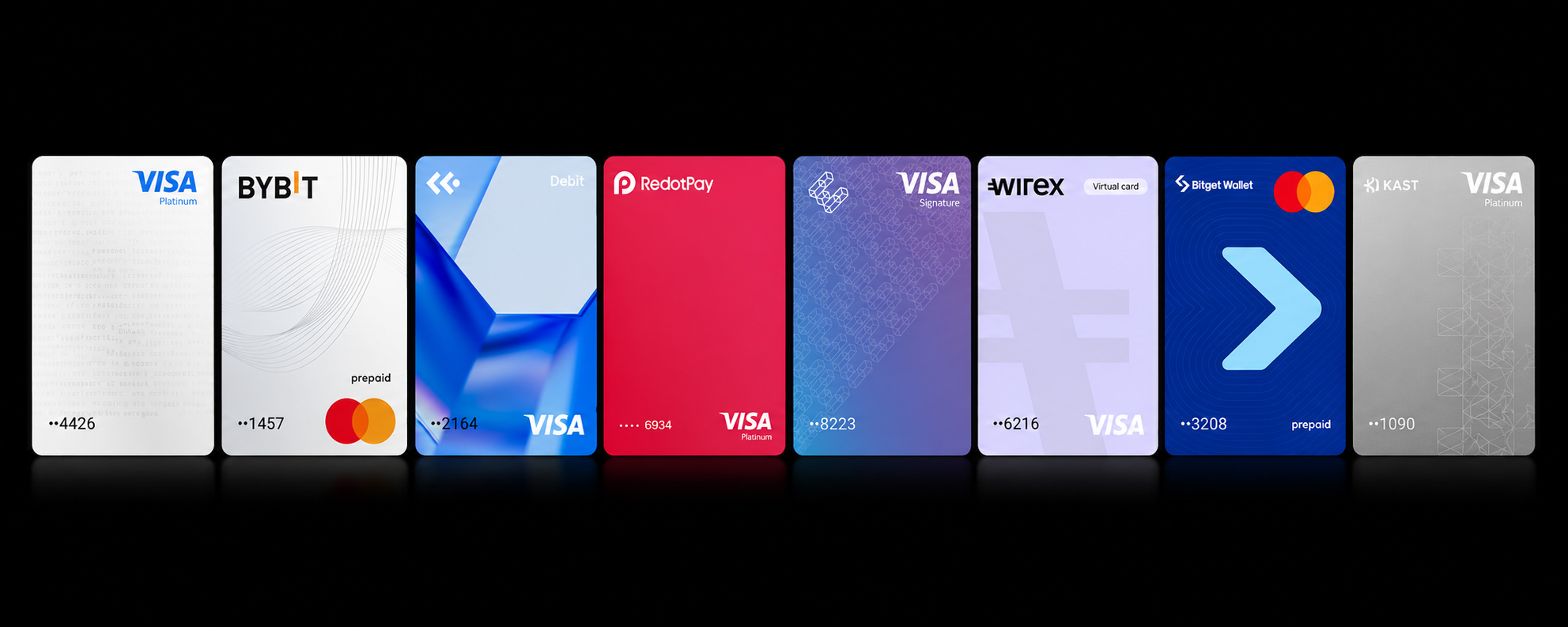
I put $10 into 8 different crypto cards to see which one actually works best in South Africa. The goal was to cut through the smoke and mirrors. Reward claims are locked behind tiers, fees hide inside exchange rates, and almost every card advertises "zero FX fees" while quietly charging one. So I ran the same purchase on all eight cards, on the same day, at the same till.
The Methodology
- Time spent: 2.5 hours downloading, signing up and completing KYC for 8 different cards.
- The purchase: 8 packets of Lays at a local OK supermarket, one on each card. Poor cashier.
- The cost per packet: R23.99.
- The official FX rate at the time: 1 ZAR = 0.061796 USD, 1 USD = 16.182216 ZAR.
At that exact spot rate, a R23.99 packet of chips should cost exactly $1.482492. Any amount charged above $1.48 against my $10 balance is hidden spread, network fee or conversion tax. I expected most cards to round up to $1.49 while claiming a 0% fee, which is already a 0.50% charge.
Visa and Mastercard both sit at a slight premium above the official mid-market rate, and that premium is charged to the crypto platform issuing the card, which then passes it down to you. Visa sources its daily rates from wholesale FX markets, and independent tests historically show Visa's base rate is only 0.2% to 0.5% above the true mid-market rate. Mastercard tends to have a slightly better raw rate than Visa. That spread comes mostly from market movement and the one to two day lag between the tap and settlement.
The South African Crypto Card Table, Base Tiers Only
| Rank | Card | Net cost on a $1.48 purchase | Gross FX spread | Base cashback | Custody | Virtual card | Setup | Best for |
|---|---|---|---|---|---|---|---|---|
| 1 | Coca | $1.47 after cashback | 1.18% | 1% USDC monthly | Non-Custodial | Free | 8 min | Balanced rewards and subscriptions |
| 2 | EtherFi | $1.45, beats the market | 0.51% | 3% instant | Non-Custodial | Free (1st) | 8 min | Everyday spending and max savings |
| 3 | Bitget | $1.47, beats the market | 0.51% | FX fee refund | Non-Custodial | Free | 10 min | Self custody and low friction |
| 4 | Wirex | $1.50 | 1.18% | 0.5% in WXT | Self-Custodial | Free | 12 min | Reliable backup |
| 5 | RedotPay | $1.52 | 2.53% | 0% | Custodial | $10 | 12 min | High-limit backup |
| 6 | Bybit | $1.49 after points | 2.53% | 2% in points | Custodial | Free | Gated | Higher volume users |
| 7 | Kast | $1.60 | 7.93% | 1.5% locked | Custodial | $2 | 10 min | Large USD or Solana spends |
| 8 | Oobit | $1.74 | 17.5% | 1% to 10% tiered | Self-Custodial | Free | 7 min | Large transactions only |
1. Coca Card
Debit Visa card. Charged: $1.50. Base cashback: 1%, paid on the 10th. Remaining balance: $8.50. Wallet architecture: fully non-custodial.
Coca Card Costs and Limits
- Virtual card: Free
- Physical card: $1 plus international shipping
- Monthly spend limit: $30,000
- ATM withdrawals: fee free up to $250 per month, standard international network fees apply above that threshold
Coca Sign-Up and KYC
Total setup time was roughly 8 minutes.
- Email verification
- ID or passport scan
- National ID number, entered separately
- Verification questionnaire
Coca, The Claim vs The Reality
The claim is "up to" 8% cashback on purchases and 50% cashback on subscriptions like Netflix and Spotify. The phrase "up to" does a lot of heavy lifting here.
- 1% cashback on all purchases up to $10,000 per month
- Cashback paid in USDC on the 10th of each month
- 5% APY on stablecoin balances
- No 50% subscription discounts in practice
Coca, Real FX Cost
The promise is "zero FX fees on direct pairs", which quietly means a fee is applied here.
- Baseline market cost: $1.48
- Actual deducted charge: $1.50
- Hidden spread: a 1.18% markup on top of the mid-market rate
- Cashback effect: the 1% cashback brings Coca to roughly a 0% net fee for the first $10,000 spent monthly
Coca is the best all-round card here once you make a single upgrade, with solid perks and stablecoin cashback that actually lands in your wallet rather than in a points ledger.
2. EtherFi
Visa Signature card. Charged: $1.50. Base cashback: 3% instant. Remaining balance: $8.55 with instant cashback applied. Wallet architecture: fully non-custodial.
EtherFi Costs and Limits
- Virtual card: first one free, additional virtual cards are $10
- Physical card: $50, metal cards unlock on higher VIP tiers
- Spend limit: up to $30,000 per day on the free Core tier
- ATM withdrawals: $250 per day with a 2% flat fee per withdrawal, there is no free tier for cash
EtherFi Sign-Up and KYC
Total setup time was roughly 8 minutes.
- Email verification
- ID or passport scan
- Verification questionnaire
- Mobile number verification
Note that EtherFi asks for a Tax ID if you want to use fiat deposits.
EtherFi, The Claim vs The Reality
Claims are 3% cashback, borrowing without selling, up to 5% APY and earning on autopilot.
- 3% cashback applies to the first $2,000 of monthly spend
- You can spend against collateral while it keeps earning yield in a vault
- Liquid vaults do offer high APY, the highest current offer being Euro Yield at 11.39%
EtherFi, Real FX Cost
The promise is 0% FX fees on EUR and USD, with a 0% to 0.5% markup plus network rate on other currencies. They do apply a small spread on a ZAR purchase, but the cashback completely absorbs it.
- Baseline market cost: $1.48
- Actual deducted charge: $1.49
- Hidden spread, gross: a 0.51% markup on top of the mid-market rate
The verdict: because the net cost was only $1.45, you mathematically paid less than global market value for those chips. Stay under the $2,000 monthly cap and you are beating the system on every swipe.
3. Bitget Wallet
Bitget Wallet prepaid card. Charged: $1.49. Base cashback: the full FX fee is refunded later. Remaining balance: $8.51. Wallet architecture: fully non-custodial.
Bitget Costs and Limits
- Virtual card: Free
- Physical card: $49 processing and shipping fee
- Spend limit: up to $5,000 daily, $100,000 yearly
- ATM withdrawals: none, there are no ATM or over-the-counter cash withdrawals
Bitget Sign-Up and KYC
Total setup time was 10 minutes.
- Email verification
- ID or passport scan
- National ID number, entered separately
- Verification questionnaire
- Mobile number verification
Bitget, The Claim vs The Reality
Bitget is pushing hard into the African market, rolling out in South Africa in May 2026, and the marketing is aggressive. The backend utility does deliver. Claims are zero fees, bank transfers, a $5 signup bonus and earning as you spend.
- The FX fee is returned as pending cashback on transaction fees, claimable only once the accumulated balance passes $1.00
- The $5 bonus unlocks after a single $5 transaction
- Bank transfers run through Banxa and incur a 6% fee
Bitget, Real FX Cost
The promise is 1.7% on non-USD payments. Out of all eight cards, Bitget's Mastercard rails were the most transparent and the closest to the true mid-market rate.
- Baseline market cost: $1.47 based on Mastercard's true mid-market rate
- Actual deducted charge: $1.49
- Hidden spread: an incredibly low 0.51% markup, well below the 1.7% Bitget promises
The verdict: factor in the $0.02 guaranteed cashback and the net effective cost drops to exactly $1.47. Bitget Wallet effectively subsidises the entire Mastercard network fee, giving you a mathematically perfect mid-market rate.
4. Wirex One
Wirex virtual card, Visa. Charged: $1.49. Base cashback: 0.5%. Remaining balance: $8.50. Wallet architecture: self-custodial.
Wirex Costs and Limits
- Virtual card: Free
- Physical card: locked behind premium tiers
- Spend limit: high daily limits, heavily dependent on tier and source of wealth checks
- ATM withdrawals: free up to roughly $250 per month, then a 2% fee
Wirex Sign-Up and KYC
Total setup time was roughly 12 minutes.
- Email verification
- ID or passport scan
- National ID number, entered separately
- Proof of address, strict verification required
- Verification questionnaire
Wirex, The Claim vs The Reality
Claims are that Wirex is one of the original pioneers of the crypto card, up to 8% Cryptoback and zero-fee FX globally.
- Wirex has been around since 2014, but the rewards system has become heavily tokenised
- To hit 8% you must lock up a large amount of the native WXT token. Base-tier users usually earn 0.5%, paid entirely in WXT rather than stable USDC
- The FX claim is mostly true, Wirex uses real-time OTC rates, but my ledger still shows a small ghost fee
Wirex, Real FX Cost
- Initial balance: $10.00
- Swipe charge requested by the terminal: $1.49
- Final balance: $8.50
- Total actual deduction: $1.50
- All-in hidden spread: a 1.18% markup on top of the mid-market rate
The verdict: Wirex is highly competitive. A final all-in spread of 1.18% puts it right next to Coca and Bitget as one of the cheapest ways to spend Rands. The downsides are cashback paid in a volatile native token and strict proof of address requirements that make onboarding a headache.
5. RedotPay, The Most Used Card in ZA
RedotPay Visa Platinum. Charged: $1.515, rounded up to $1.52. Base cashback: 0%. Remaining balance: $8.48. The card itself costs $10, so I had to add $20 for this test. Wallet architecture: custodial.
RedotPay Costs and Limits
- Virtual card: $10
- Physical card: $100 plus international shipping
- Spend limit: $1 million yearly, $100,000 per transaction
- ATM withdrawals: 2% fee up to $10,000 monthly, rising to 3% above that. There is no fee-free ATM tier
RedotPay Sign-Up and KYC
Total setup time was roughly 12 minutes, slightly longer because of address verification.
- Email verification
- ID or passport scan
- National ID number, entered separately
- Proof of address, required for full limits
- Verification questionnaire
- Mobile number verification
RedotPay, The Claim vs The Reality
The claim is "up to 40% referral commission" and competitive conversion rates. The perks lean entirely toward affiliates rather than rewarding everyday spenders.
- 0% cashback on regular card spending
- Yield earning available on USDT and USDC
- Crypto credit lines available against collateral
- P2P integrated, though barely used
- USD and EU banking accounts
- A genuinely strong referral program
RedotPay, Real FX Cost
The promise is "high limits, low fees", usually citing a roughly 1% internal crypto-to-fiat conversion fee.
- Baseline market cost: $1.48
- Actual deducted charge: $1.515 claimed
- Hidden spread: a 2.53% markup on top of the mid-market rate
- Cashback: with 0% base cashback there is nothing to offset the spread, so that 2.53% is your true out-of-pocket cost
6. Bybit Card
Bybit prepaid card. Charged: $1.50. Base cashback: 2%, given in points. Remaining balance: $8.47. Wallet architecture: custodial.
Bybit Costs and Limits
- Virtual card: Free
- Physical card: $29.99
- Spend limit: up to $10,000 daily, $50,000 monthly
- ATM withdrawals: first $100 per month free, then a 2% flat fee
Bybit Sign-Up and KYC
Usually fast, but heavily gated for South Africans.
- Email verification
- ID or passport scan
- National ID number, entered separately
- Proof of address
- Tax number
- Authenticator setup
Bybit, The Claim vs The Reality
Claims are up to 10% cashback, cashback on every purchase, a $10 airdrop after depositing $100 and 100% off some subscriptions.
- 2% on the starter tier
- Cashback is paid in points, not directly in USDC
- The $10 airdrop requires a 100 USDT deposit plus card spending, and must be claimed manually
- You must spend 500 USDT a month to unlock 100% subscription cashback, though it does work across multiple subscriptions
Bybit, Real FX Cost
The promise is a transparent 2% foreign exchange fee. The reality is a double fee if you hold stablecoins: 2% for spending outside USD and EUR, plus a 0.9% crypto conversion fee to turn your USDC into fiat before the swipe even happens. Their breakdown screen shows $1.50, but the ledger shows an actual USDC charge of 1.5237.
- Initial balance: $10.00
- Actual USDC deducted: 1.5237
- Final balance: $8.47
- Baseline market cost: $1.48
- Hidden spread, gross: a 2.53% markup, which matches their 2% FX fee plus roughly 0.9% conversion fee
The verdict: Bybit's fee structure is heavy, pushing gross markup to almost 3%. The 2% cashback brings the net cost back to $1.49, a competitive 0.76% above market, but rewards arrive as points rather than instant stablecoins. The 100% subscription discount is a heavy incentive if you spend enough to unlock it.
7. Kast
Kast Visa Platinum. Charged: $1.60. Base cashback: 1.5%. Remaining balance: $6.40, including the $2 virtual card fee. Wallet architecture: custodial.
Kast Costs and Limits
- Virtual card: $2. Kast markets the base tier as free in 2026, but regional variations and legacy signups still trigger this issuance fee
- Physical card: roughly $40 plus delivery
- Spend limit: unlimited daily purchases
- ATM withdrawals: $3 flat fee plus 2% of the amount, very expensive for pulling ZAR cash locally
Kast Sign-Up and KYC
Total setup time was roughly 10 minutes.
- Email verification
- ID, passport or driver's licence scan
- National ID number, entered separately
- Proof of address
- Verification questionnaire
- Mobile number verification
Kast, The Claim vs The Reality
Kast markets itself as a premium Solana-native lifestyle card. The perks are solid, but they come with strings attached. Claims are 0.5% to 1.75% FX fees, 1.5% cashback and Solana-first architecture.
- There is a $0.10 to $0.20 low transaction surcharge on any non-USD purchase under $25
- The 1.5% cashback carries a 14-day holding period and cannot be withdrawn to external wallets. It is locked inside the Kast ecosystem to offset future card purchases
- Top-ups do flow through Solana using USDC, USDT or SOL, with near-instant settlement and sub-cent gas
Kast, Real FX Cost
- The math: $10 deposit, minus the $2 virtual card fee, minus the $6.40 remaining balance, leaves $1.60 deducted for the chips
- Baseline market cost: $1.47
- Actual deducted charge: $1.60
- Hidden spread: a massive 7.93% markup. They claim either a 0.5% to 1.75% fee or a $0.10 fee, but here they charged both, a 1.18% markup plus $0.10
The verdict: Kast works if you are spending heavily in USD or moving large amounts on Solana. For daily small-ticket ZAR spending like coffee or groceries, the flat low-transaction fee makes it mathematically one of the most expensive cards you can use in South Africa.
8. Oobit
Visa Platinum. Charged: $1.74. Base cashback: 1%. Remaining balance: $8.26. Wallet architecture: a Web3 bridge, so funds stay in your own wallet until the split second the transaction is authorised.
Oobit Costs and Limits
- Virtual card: Free
- Physical card: not available, the platform runs entirely through Apple Pay and Google Pay
- Spend limit: up to $5,000 daily, $150,000 monthly
- ATM withdrawals: not supported, virtual only
Oobit Sign-Up and KYC
Total setup time was roughly 7 minutes, the fastest of the group.
- Email verification
- ID or passport scan
- National ID number, entered separately
- Verification questionnaire
- Mobile number verification
Oobit, The Claim vs The Reality
Claims are up to 10% cashback, never pre-loading again and a Bitcoin debit card.
- The 10% rate is strictly limited to purchases made with their native OOB token. Paying with USDT or USDC tops out at 5%, and only after you have spent $1,500 through the app within a 90-day cycle
- The cashback program is heavily restricted by regional and asset limitations
- The no-preload wallet link is the killer feature. Your funds stay in crypto until you pay
- You can absolutely pay with Bitcoin directly, but watch the fees
Oobit, Real FX Cost
Oobit is transparent about pricing: a 1% transaction fee or a $0.25 minimum, whichever is higher. I paid a 0.51% fee plus the $0.25.
- Baseline market cost: $1.48
- Actual deducted charge: $1.74
- Hidden spread: a staggering 17.5% markup on top of the mid-market rate
The verdict: Oobit's underlying technology is arguably the best on the market for true Web3 self custody. The fee structure makes it unusable for small everyday purchases. Buy a R5,000 plane ticket and you pay a standard 1%. Buy a R25 coffee and that $0.25 minimum hits you with a 15% to 20% effective markup every single time.
What This Test Actually Proves
Three things came out of 2.5 hours of KYC and eight packets of chips.
First, the advertised fee is almost never the real fee. Only Bitget came in below its own published rate. Everyone else either matched it or quietly beat it in the wrong direction.
Second, cashback is the deciding factor at small ticket sizes. EtherFi charges a spread and still leaves you better off than the mid-market rate, because 3% instant cashback is larger than a 0.51% spread. A 0% cashback card like RedotPay has nothing to hide behind.
Third, flat fees are the silent killer. Percentage fees scale with your purchase. A $0.25 or $0.10 flat fee does not, and on a R23.99 purchase it turns a reasonable card into the most expensive option on the list.
If you spend small amounts often in South Africa, use EtherFi, Bitget or Coca. If you spend large amounts in USD, Kast and Oobit stop being punishing and start making sense.